
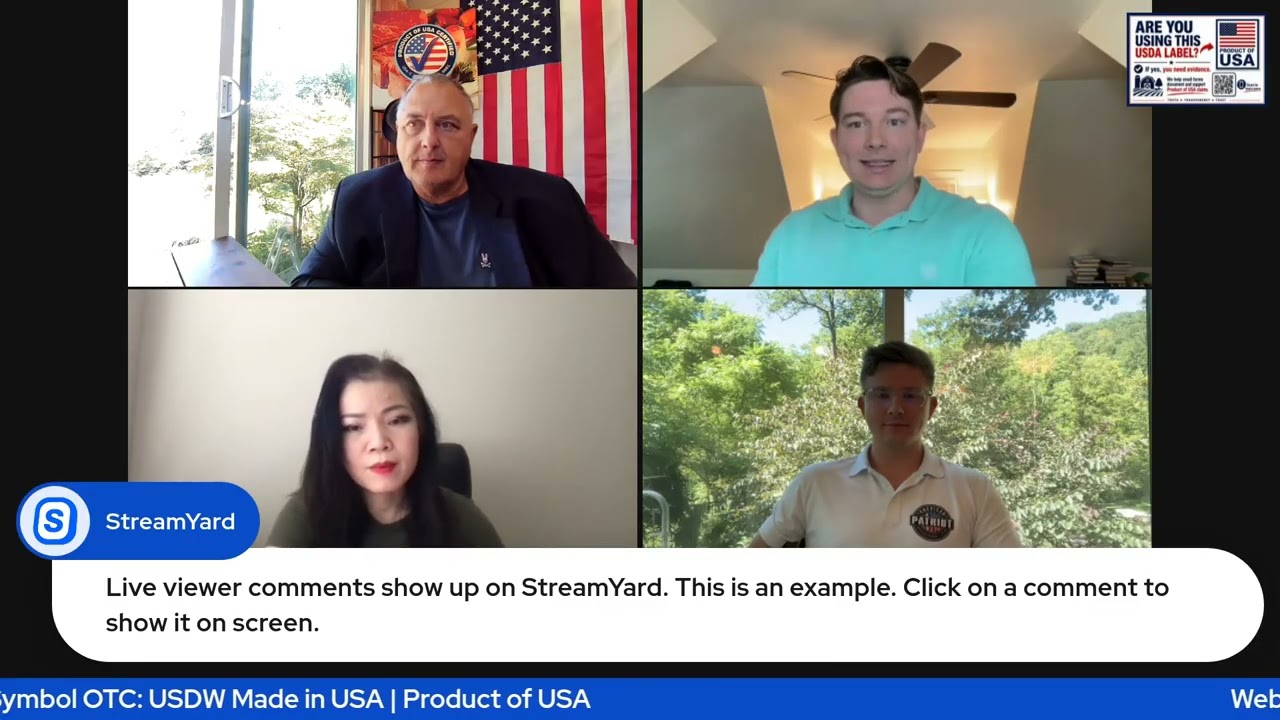
Made in USA Mondays, Episode 3, aired August 24, 2026, with guest Bruce Porter Jr. This summary is based on automatic YouTube captions, which can misspell names and drop words.
The August 24 episode of Made in USA Mondays was built around a simple question: when food is recalled, how does a shopper know whether the package in the refrigerator is part of it? The hosts said a significant blueberry recall involving E. coli was underway, with hospitalizations already reported, and they also pointed to shell eggs and lettuce. They were careful to say their system is not a promise that recalls will stop. The pitch was faster notice — “stopping it before enough people get sick.”
They spent time on the difference between a recall and an outbreak, and on why origin and safety are related but not the same thing. A country-of-origin label, they argued, tells you where food came from; it does not, by itself, tell you which lot, which plant, or which farm touched a contaminated blueberry. That is why they kept returning to traceability: a documented chain, which they said they keep on an immutable blockchain ledger, from what is imported into the United States to what lands on a consumer’s table. If a shopper has already scanned a product, they said, a recall can trigger a push notice before that food is served at a weekend cookout.
Guest Bruce Porter Jr. joined mid-episode, the show’s first named guest. The conversation then widened from blueberries to ground beef. The hosts said they were uneasy buying ground beef because imported product can be mixed with USA beef without a clear designation on the package. They discussed large volumes of imported ground beef — figures they cited in the hundreds of millions of pounds, including a reference to product associated with Argentina — and they argued that simply naming a source country does not give you a recall trail, litigation management, or a way to tell which packages on a store shelf are in the lot. One host also said some imported beef had been rejected, including a reference to a rejection by China, and that mixing cheap imported trim with USA product leaves the consumer with no way to tell the two apart.
Mandatory country-of-origin labeling, or MCOOL, was the policy thread underneath those examples. The hosts said mandatory country-of-origin labeling for pork and beef was removed in 2015 and they attributed that repeal to the Obama administration under pressure from large food interests. They argued that bringing MCOOL back matters, but that a label alone is not the same thing as verified data. The phrase they repeated with Bruce was “trust but certify” — a play on Reagan’s “trust but verify.”
They also talked about farms going out of business, local producers they want to get onto a scanner, and a scholarship-style onboarding offer with setup and first-audit fees waived. They mentioned an upcoming appearance at UNGA-week blockchain events, including a gathering they said would run through the 19th at the Hard Rock in Times Square. The close was a two-pronged approach Bruce sketched: get the farmers and producers on the platform, and get the web app into the hands of ordinary shoppers, one scan at a time, starting at miusa.one.
We have covered the MCOOL history the hosts were referring to in Cir 2015: Washington folded under WTO pressure with the mCOOL law, and the Product of USA standard in USDA Closes Loophole with Strict Product of USA Origin Labeling Rule.
Key takeaways
- The episode used an active blueberry E. coli recall, plus eggs and lettuce, to argue that shoppers need a way to be notified if a product they already bought is later recalled.
- The hosts distinguished a recall from an outbreak, and origin labeling from lot-level safety data.
- Guest Bruce Porter Jr. joined for a discussion of imported ground beef, mixing, and why a country name on a shipment is not the same thing as a package-level audit trail.
- The panel said mandatory country-of-origin labeling for beef and pork was repealed in 2015 and argued for bringing verified origin data back, under the slogan “trust but certify.”
- Figures on illnesses, farm losses, and import volumes were cited in conversation; because the automatic captions are uneven, those numbers should be checked against official sources before they are treated as exact.
Notable quotes
Today’s episode really is about recalls, recall management, traceability, knowing where your food come from, knowing what’s going on with the food that you purchased.
Made in USA Mondays Ep. 3, about 1:58, automatic captions
That’s what we say, trust but certified. That’s it… Reagan’s trust but verified. We say trust but certified.
Made in USA Mondays Ep. 3, about 20:21, automatic captions
Country of origin label is it just tells you where the food comes from.
Made in USA Mondays Ep. 3, about 42:30, automatic captions
FAQ
Who was the guest on Episode 3?
Bruce Porter Jr., who is named in the episode title and is introduced on the show as the first guest.
What recall were the hosts talking about?
They described a blueberry recall involving E. coli, and also mentioned shell eggs and lettuce. They cited August 20 as the date of the most recent data they were looking at. Check current FDA or USDA recall notices for the official lists.
What is MCOOL, as discussed here?
Mandatory country-of-origin labeling. The hosts said the requirement was removed for beef and pork in 2015 and argued that origin labeling has to be paired with verifiable data, not only a country name.
Source & credit
Episode: Made in USA Mondays Ep. 3 — Recalls, MCOOL & Knowing Your Food is Safe (ft. Bruce Porter Jr.), on YouTube @madeinusainc.
No matching X post was found on @REISERIAM for this episode. The August 24 air date is stated in the episode itself.
Summary prepared from automatic YouTube captions. Quotes are approximate and may reflect caption errors.