
Made in USA Mondays, Episode 2. The episode does not state an air date, so this draft is backdated to the YouTube upload date, August 25, 2026. This summary is based on automatic YouTube captions, which can misspell names and drop words.
Episode 2 of Made in USA Mondays was recorded on the move. The hosts said Adam Reiser and Michelle Tan were in the Hamptons on Long Island for a conference, while the rest of the panel stayed with the show so the weekly episode would still go out. The topic was narrower than the premiere: what ranchers and farmers need to know about the 2026 Product of USA standard, why it matters, and what Made in USA Inc. says it will do to get a farm ready for an origin question.
Aaron, identified in the captions as Aaron Riser, opened by repeating the core change. As of January 1, 2026, he said, USDA’s Food Safety and Inspection Service raised the bar for Product of USA. Under the old practice, cattle could come across the border from Mexico, be slaughtered and processed in the United States, and still carry a Product of USA claim. That, the hosts said, is over. The claim now requires the whole origin chain — born, raised, slaughtered, and processed, or, for crops, grown — in the United States. They called it a mandatory standard for anyone who uses the claim, not a voluntary marketing line, and they distinguished it from a broader mandatory country-of-origin labeling (MCOOL) regime, which they said is a related but separate fight.
The practical warning was about paperwork. If a buyer or an inspector asks for the origin story, the hosts said a producer has to have the documentation already organized — not backdated, not filled in after the fact. They said a failure to produce that file on a short deadline, which they described as 24 hours, can mean an immediate fine, and that inventing or backfilling records is treated as a serious offense. Made in USA Inc.’s offer, as they described it, is to get a farm or ranch audit-ready: collect the records, stamp them on a trusted module, put a fingerprint of that data on a blockchain, attach a QR code, and have the packet ready during working hours in minutes instead of a scramble overnight.
They kept returning to the fairness argument. A Product of USA or Made in USA seal, they said, is supposed to differentiate the people who actually did the work in the United States from the people who only want the premium. If the claim is not backed, “we can discredit everything you’ve done.” They also said they are not writing the USDA rule. They are helping producers meet it, and they were blunt that if a customer lies to them on the documents, that lie will not hold up.
Near the end they made a commercial offer they said would not last forever: for the first 10,000 farms they onboard, they claimed they are waiving a first-time audit fee they put in the $6,000 to $10,000 range, and offering an ongoing price they compared to a cup of coffee a day, or about $120 a month. They also lost the Hamptons feed partway through and finished the episode with Aaron and the younger Adam on the line. The closer was the same mission as Episode 1: put honest origin back on the package, and give a small farm a way to compete on that claim.
That on-the-ground Product of USA standard is the same change we covered in USDA Closes Loophole with Strict Product of USA Origin Labeling Rule and in What “Product of USA” Beef Means Now: A Farm-to-Label Guide.
Key takeaways
- The hosts said the January 1, 2026 USDA FSIS Product of USA standard requires the full origin chain in the United States, closing the old loophole in which imported cattle could be relabeled after processing here.
- They treated a Product of USA claim as something a producer must be able to document on a short deadline, without backfilling records.
- Made in USA Inc. described a one-click, QR-and-blockchain packet meant to make a farm USDA-ready when someone asks for the origin story.
- They distinguished this Product of USA rule from a wider mandatory country-of-origin labeling (MCOOL) fight, which they said is related but not the same rule.
- They said early farms would have first-time audit fees waived; those figures came from the hosts, not from a USDA document read on the show.
Notable quotes
This year, January 1st of 2026, something significant happened… the USDA and FSIS, the Food Safety and Inspection Service, have started cracking down and raising the standard for what it means to be product of USA.
Made in USA Mondays Ep. 2, about 2:46, automatic captions
Before this year product of USA could tell you where the last meaningful step happened. Right today it tells you [the whole chain].
Made in USA Mondays Ep. 2, about 12:11, automatic captions
We’re not creating the USDA rule.
Made in USA Mondays Ep. 2, about 46:32, automatic captions
FAQ
Who appeared on Episode 2?
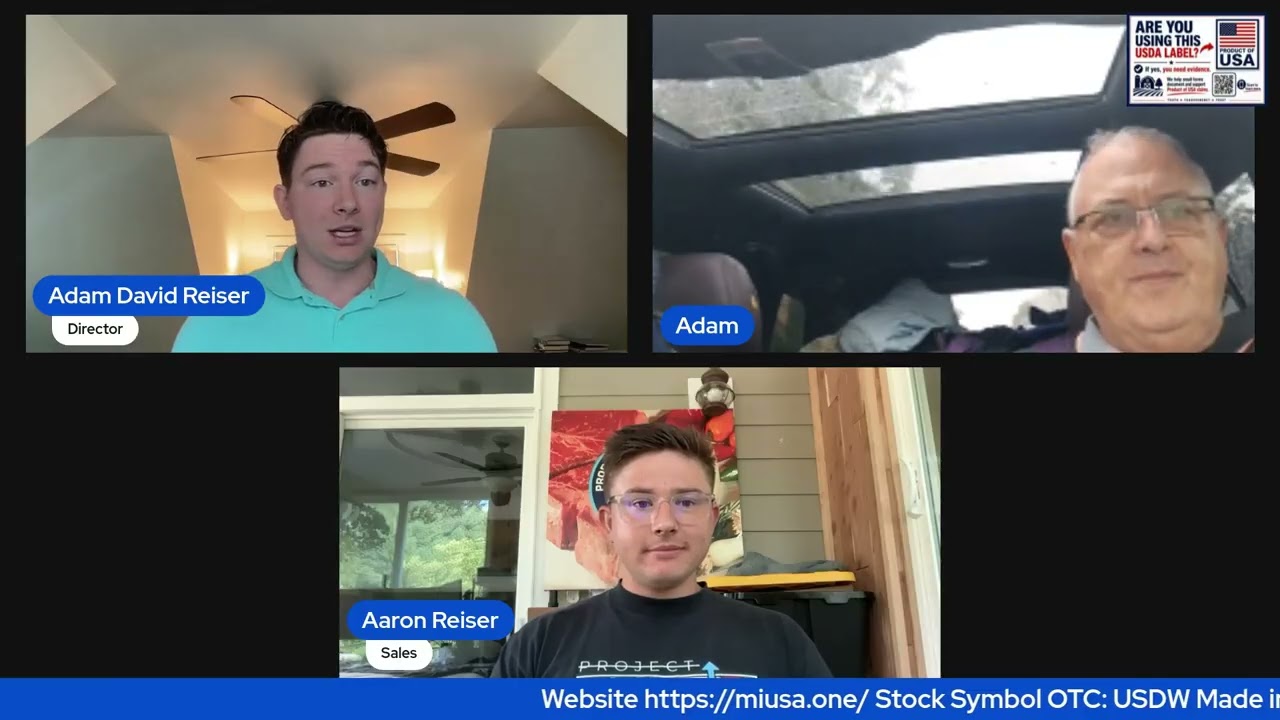
The captions identify Aaron and a younger Adam as the studio hosts, with Adam Reiser and Michelle Tan joining from a conference in the Hamptons. The remote feed dropped before the end of the show.
What was the episode’s main advice to farmers and ranchers?
If you are going to use a Product of USA claim, have the origin documentation ready in advance. The hosts said you cannot backdate or backfill that file once someone asks for it.
Does this episode replace official USDA guidance?
No. It is a podcast discussion of the standard and of Made in USA Inc.’s verification offer. Producers should still read the USDA FSIS Product of USA rule itself.
Source & credit
Episode: Made in USA Monday Ep. 2 — Helping Farmers with USDA Product of USA, on YouTube @madeinusainc.
No matching X post was found on @REISERIAM for this episode.
Summary prepared from automatic YouTube captions. Quotes are approximate and may reflect caption errors. The episode does not state an air date; the draft date follows the YouTube upload date of August 25, 2026.