
Made in USA Mondays, Episode 1, aired August 10, 2026. This summary is based on automatic YouTube captions, which can misspell names and drop words.
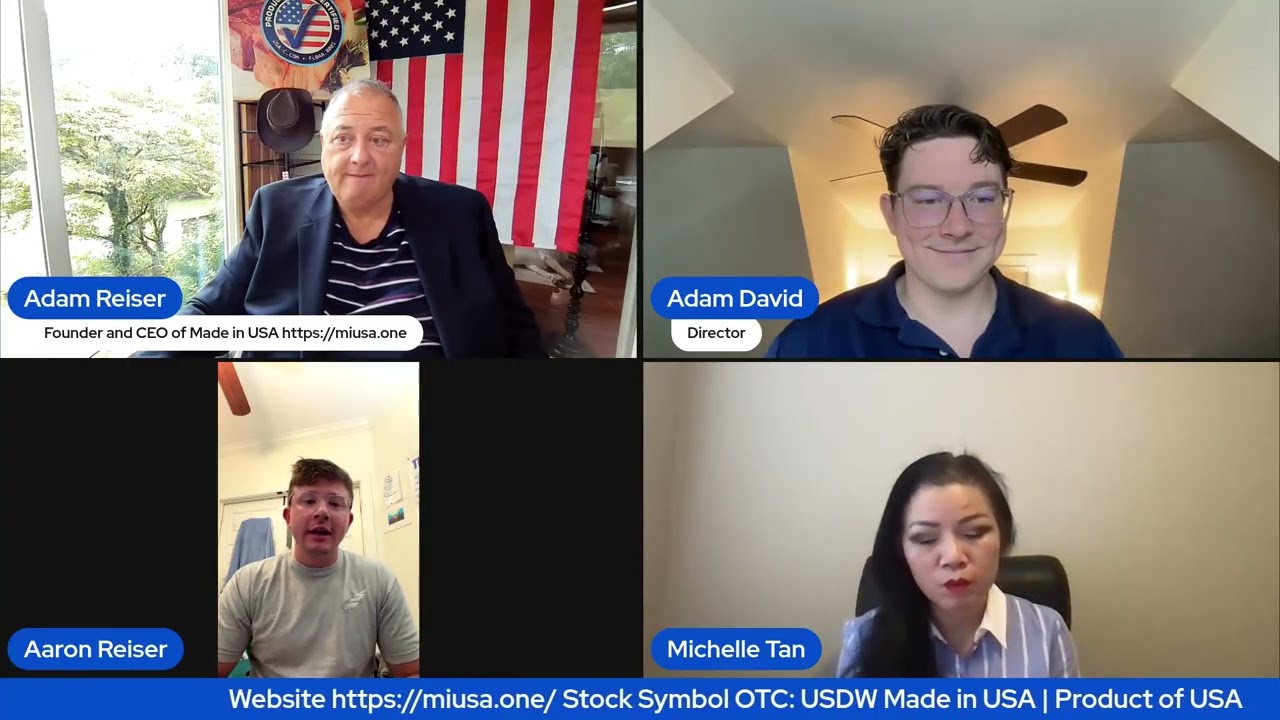
The first episode of Made in USA Mondays opened with three stories the hosts said they would cover: USDA Product of USA labeling, oysters and nutrient credits, and the story of Made in USA Inc. The panel included Michelle Tan, along with hosts the captions identify as Adam and Aaron. They framed the show around the 250th anniversary year of the United States and around a labeling change that, they argued, finally gives Product of USA some legal weight.
Adam walked through the new USDA Product of USA standard. As he described it, a Product of USA claim on an animal product now has to mean the animal was born, raised, slaughtered, and processed in the United States — four supply-chain checkpoints, not just the last step in a USA plant. He said the USDA had been working on the rewrite for several years, with legislative work going back to 2023, a 2024 passage, and the new standard taking effect in 2026. The point, he said, is to weed out companies that have been using a Product of USA flag they should not have been using. He called the old marketing claim something that now has “teeth,” and almost a legal claim: if you put Product of USA on a package, you are legally claiming that origin, and you can be held to it. The hosts also tied the rule to documentation: a farmer or rancher, they said, has to be able to produce the paperwork — when the animal was born, raised, harvested, processed — on a short deadline, and cannot invent it after the fact.
That led into the company’s own verification pitch. The hosts said Made in USA Inc. has been at this work for more than 25 years, using blockchain and AI to attach origin data to a product you can scan. They described a progressive web app at miusa.one, a digital wallet that stores a scan, and a recall-management alert that can notify someone who already scanned a product if that lot later goes on recall. They used baby formula, lettuce, and hamburger as examples of why a shopper would want that trail, and they pointed back to the farm-to-table idea: origin is not a slogan if you cannot show where the animal or the crop came from and where it ended up.
The second story was oysters and nutrient credits. The hosts described oysters as filter shellfish that pull pollutants out of coastal water, and a market that pays for quantified “nutrient credits” when farms can show how much they are removing. They said their job is to make that accounting simple for oyster farmers who are already doing the work, and they argued that a real incentive is what gets more oysters in the water and more transparency for the polluters those credits are meant to offset. They also called the credits a Product of USA story, not only an environmental one.
The close was the company’s own origin story and the reshoring pitch. One host described learning what Made in USA meant after the Ford plant in Mahwah, New Jersey, closed, then spending years going back and forth to China with Michelle Tan to unbolt production and drag supply chains home. They talked about bringing manufacturing back, standing up technical schools, and a simple closer: made here, built here, verified here. The last word, from the younger host, was that demand is rising from people who want to know what they are eating and what they are buying.
For more on the USDA Product of USA standard the episode walked through, see USDA Closes Loophole with Strict Product of USA Origin Labeling Rule and our later farm-to-label guide, What “Product of USA” Beef Means Now.
Key takeaways
- The hosts said Product of USA on an animal product now requires all four steps — born, raised, slaughtered, and processed — to happen in the United States.
- They described the 2026 USDA standard as turning a marketing claim into something closer to a legal claim, with documentation that has to be ready on a short deadline.
- Made in USA Inc. positioned its scan-to-wallet app and recall alerts as the way to attach that origin proof to a product a shopper can actually check.
- Oyster farming and nutrient credits were presented as a second Product of USA story: quantify the cleanup, create an incentive, and make the data simple for the farm.
- The episode closed on reshoring manufacturing and rebuilding trades, not only on food labels.
Notable quotes
A product of USA is really anything that happens to be born, raised, slaughtered, or processed all within the United States. So those are the four major supply chain checkpoints.
Made in USA Mondays Ep. 1, about 1:39, automatic captions
It’s no longer just a marketing claim. It’s got some teeth behind it now. Yeah. I would almost classify it as a legal claim these days.
Made in USA Mondays Ep. 1, about 5:03, automatic captions
I think there’s more demand than ever before for people who want to know what they’re eating or what they’re buying.
Made in USA Mondays Ep. 1, about 51:11, automatic captions
FAQ
What did the first Made in USA Mondays episode cover?
Three stories: the USDA’s 2026 Product of USA labeling standard, oysters and nutrient credits, and the story of Made in USA Inc., including its scan-based verification and reshoring work.
What did the hosts say Product of USA means now?
For animal products, they said it means born, raised, slaughtered, and processed in the United States, not merely processed in a USA plant.
Where can I watch Episode 1?
The full episode is on YouTube at youtube.com/watch?v=hcuN-HhRsxw. A written episode recap was also posted on X at @REISERIAM.
Source & credit
Episode: Made in USA Mondays Ep. 1 — Made in USA Inc | 8.10.26, on YouTube @madeinusainc.
X post: @REISERIAM, August 10, 2026.
Summary prepared from automatic YouTube captions. Quotes are approximate and may reflect caption errors.