
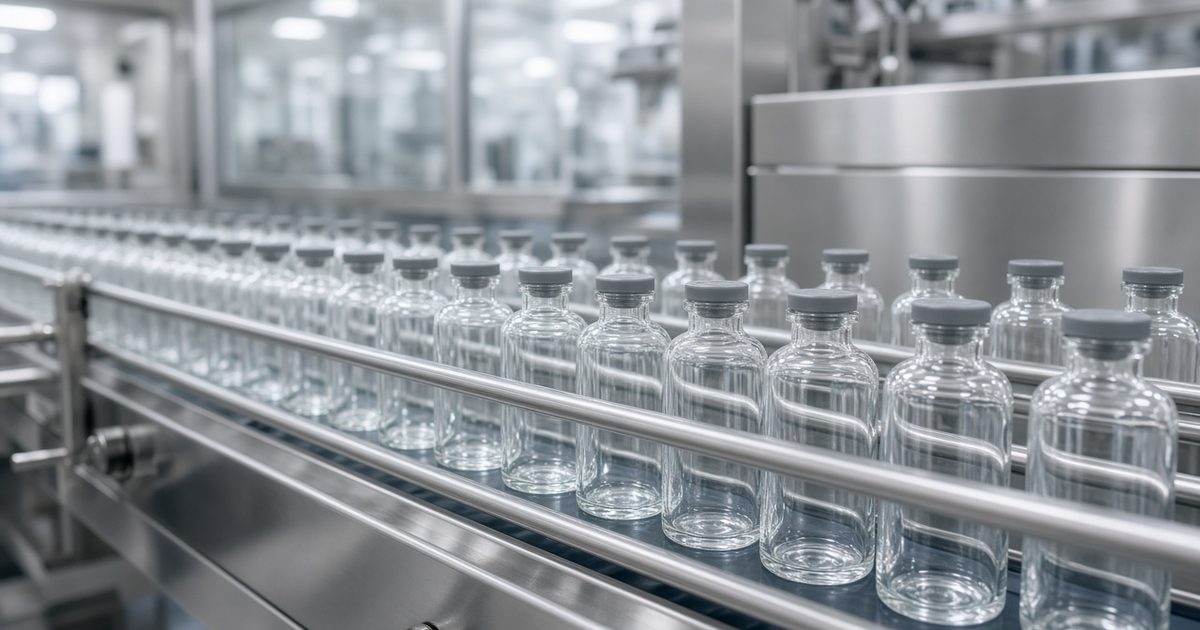
Corning, Merck and Pfizer announced Corning Valor Glass on July 20, 2017. Valor is a new glass for vials and cartridges that hold injectable drugs. Corning said it was making an initial $500 million investment and creating 1,000 new USA jobs.
The plan
Corning called the $500 million the first part of a planned $4 billion investment that would create 4,000 high-tech jobs. At the White House event, President Trump said the first phase would be spread across facilities in New York and New Jersey, plus a new plant in the Southeast.
The White House said 98% of the $4 billion pharmaceutical glass industry had previously been based overseas.
According to Corning, the White House Office of American Innovation helped bring the companies together.
Why Merck and Pfizer were involved
Corning said Valor Glass offers better chemical durability, strength and damage resistance. It credited process insights from the two drugmakers with shaping the product. Merck said it planned to switch several injectable products to the new glass, pending regulatory approval. Pfizer said it was testing the glass at several of its manufacturing sites.
Incentives
Corning CEO Wendell Weeks told CNBC the federal government had offered no incentives, such as tax breaks, for USA production. Asked whether the glass might have been made overseas without the government’s involvement, he said, “We probably would have taken a little more balanced approach.”
FAQ
What is Valor Glass?
A Corning pharmaceutical glass for vials and cartridges, developed with input from Merck and Pfizer.
How large is the investment?
An initial $500 million and 1,000 jobs, as the first phase of a planned $4 billion and 4,000 jobs.
Were there federal incentives?
CEO Wendell Weeks told CNBC there were no incentives such as tax breaks.
Source & credit
Source: Corning Incorporated: “Merck and Pfizer Collaborate with Corning to Modernize Pharmaceutical Glass Packaging”, July 20, 2017.
Also: RealClearPolitics: transcript of the White House announcement; Reuters: “Trump unveils companies’ $500 million U.S. drug packaging project”; CNBC: Corning CEO interview.