

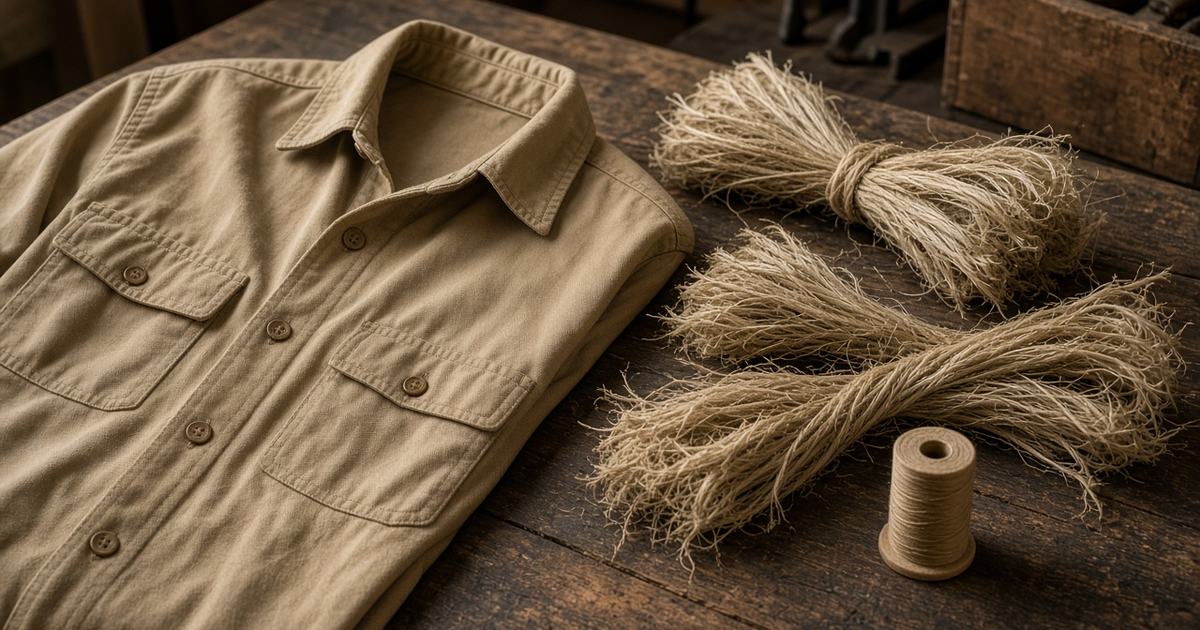
Two Montana companies have made a work shirt from hemp grown and processed in the USA, with every step done domestically, Montana Free Press reported on February 13, 2026.
The supply chain
IND Hemp in Fort Benton processed hemp grown in 2020 on a farm north of town. Great Falls apparel brand Smith and Rogue, an offshoot of the North 40 Outfitters chain, designed the Benton work shirt, a blend of Montana hemp and Arizona cotton. The path:
- Raw fibers went from Fort Benton and Arizona to North Carolina for refining and blending.
- Another North Carolina company spun the yarn.
- The fabric was woven in South Carolina and finished in Georgia.
- Cutting and sewing were done in New York City.
The first run was 239 men’s shirts, released in December 2025 at $150. One shipment of finished fabric went missing on the way to New York and has not been found.
“The fiber moved probably 10 more times than it had to, and freight is your biggest enemy in all these things.”
Morgan Tweet, co-founder and CEO, IND Hemp, to Montana Free Press
Why it matters for Made in USA
Hemp was federally banned for most of the last century until the 2018 farm bill. The project shows how much textile capacity the USA has lost. Montana Free Press noted that more than 97% of clothing sold in the USA is made overseas, and that spinning and weaving equipment is costly for small companies.
Smith and Rogue plans a second run and more products. Both companies said a hybrid model that sends USA-grown hemp to overseas factories may be needed to reach larger volumes. A garment made that way would not qualify as Made in USA.
FAQ
What is the Benton shirt?
A $150 work shirt from Smith and Rogue made from Montana-grown hemp and Arizona cotton, processed and sewn in the USA.
Where was the shirt made?
Fiber was blended and spun in North Carolina, woven in South Carolina, finished in Georgia and sewn in New York City.
Why is USA-made hemp clothing rare?
Hemp was federally banned until 2018, and the USA lost much of its spinning and weaving capacity.
Source & credit
Originally reported by Montana Free Press (Matt Hudson), February 13, 2026: The “American-made” hemp shirt experiment