

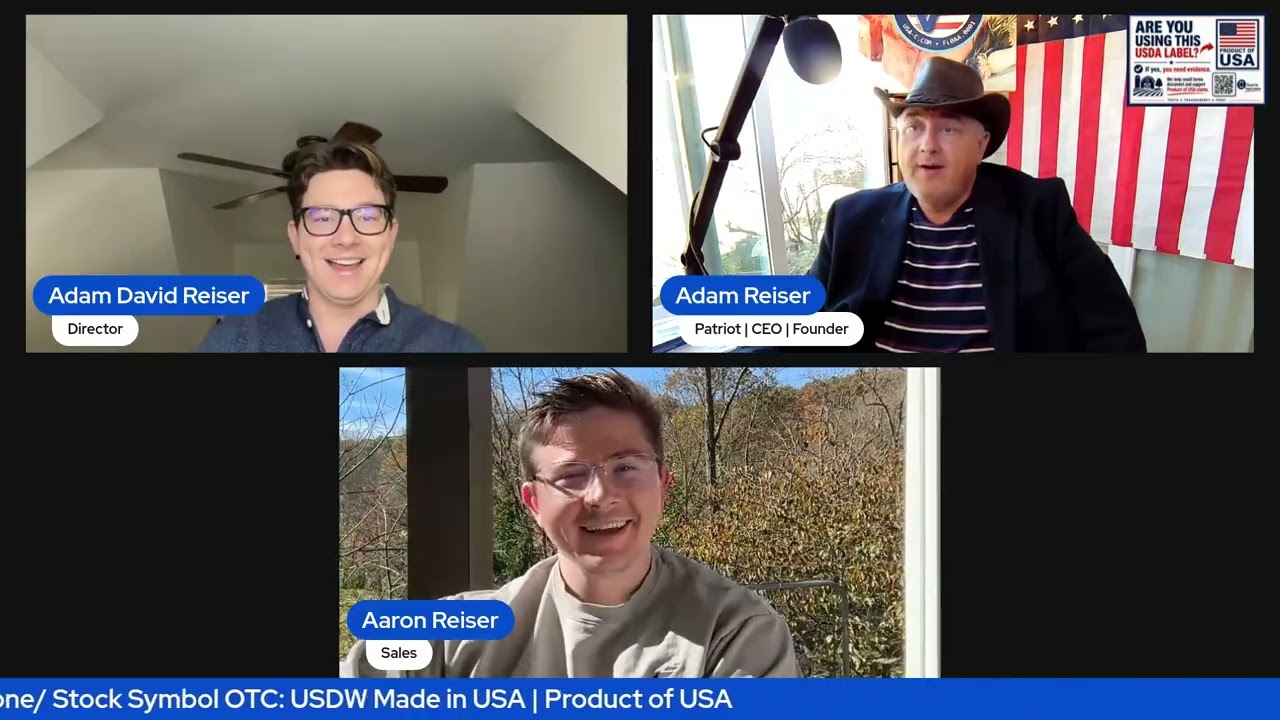
Made in USA Mondays, Episode 12, aired October 26, 2026. This summary is based on automatic YouTube captions, which can misspell names and drop words.
The episode was also shared on X at @REISERIAM.
Made in USA Mondays Episode 12, aired October 26, 2026, asked a question sitting just behind a Made in USA claim: who’s inside? The hosts meant hidden components, software, communications, and data paths in the connected devices people trust every day. A product might be assembled here, sold by a trusted brand, and installed in a hotel, a hospital, or a sensitive government facility, they said, and you still have to ask who made the critical parts, who can update the software, and where the data actually goes.
They used a home Wi-Fi router as the everyday example. Open it up, and you may find a processor, a wireless module, memory, and firmware sourced elsewhere even if a US company put the box together. Does that still meet an FTC origin standard? They also pointed to cameras, including Ring and Flock, and to chips inside connected products. One host said components manufactured in China often have a dual-use design, and they discussed military-civil fusion as a reason those parts can report back to an original equipment manufacturer or, they argued, to a foreign government. That, they said, is a data-sovereignty and security risk, not just a bill-of-materials issue.
The conversation also touched US-caught seafood labeling, which they said they have been pushing for years for fishermen, and a later example of farm equipment: you may think you own a tractor, but if the software is locked, you do not fully control it. Adam, marking about 27 years in this work, tied the theme back to reshoring. Assembly in the United States is not the same as knowing what is inside, or who is listening through it.
Episode 12 is the electronics version of the grocery argument from the label series. A Made in USA or assembled-in-USA line on the outside does not automatically answer the question of origin, update control, or data flow on the inside.
Key takeaways
- The hosts asked who made the critical parts inside devices that may be assembled in the United States and installed in homes, hotels, hospitals, or government facilities.
- A home router was the working example: a US company can assemble a product while sourcing the processor, radio, memory, and firmware elsewhere.
- They argued that some foreign electronic components are dual-use and can send data back to an original manufacturer, which they framed as a security and data-sovereignty risk.
- They also discussed cameras, locked tractor software, and US-caught seafood labeling as related control-and-origin problems.
- Their conclusion was that an outside Made in USA or assembled-in-USA claim does not, by itself, tell you what is inside or where the data goes.
Notable quotes
A product might be assembled here, sold by a trusted company and installed in a hotel, hospital, or even a sensitive government facility. But who made the critical parts that go into that product? Who can update its software? Where does its data actually go?
Made in USA Mondays Ep. 12, about 01:11, automatic captions
If we were to open up that home Wi-Fi router, we might find a processor, a wireless module, memory, maybe firmware. But can a US company put together a whole product while sourcing all of these major electronic parts elsewhere?
Made in USA Mondays Ep. 12, about 10:03, automatic captions
If they’re reporting a household back to the original manufacturer, well, that is a security risk. That’s a data risk. That’s data sovereignty right there.
Made in USA Mondays Ep. 12, about 16:55, automatic captions
FAQ
What does "who’s inside" mean in this episode?
The hosts were talking about hidden components, firmware, and data paths inside connected devices. A product can be assembled in the United States and still rely on foreign chips or software that send information elsewhere.
How does that relate to a Made in USA claim?
They asked whether sourcing major electronic parts abroad is compatible with an FTC origin standard, and they argued that shoppers and institutions should know who made the internals and who can update them.
Where can I watch Episode 12?
The full episode is on YouTube at youtube.com/watch?v=nTx20l5hQRA. It was also posted on X at @REISERIAM.
Related reading
- Data sovereignty and the Data Wallet
- Anduril, Bluechip, and Made in USA domestic content
- FTC Made in USA enforcement and certification in 2026
- Made in USA Mondays Ep. 11
- FDA draft guidance on USA-origin seafood labeling
Source & credit
Episode: Made in USA Mondays Ep. 12 — Made in USA, but Who’s Inside?, on YouTube @madeinusainc.
X post: @REISERIAM, October 26, 2026.
Summary prepared from automatic YouTube captions. Quotes are approximate and may reflect caption errors.