
For decades, Made in USA Certified has asked companies to prove where their products come from. The next question may be just as important: can you prove where your data goes?
US DATA CERTIFICATION is just what is needed now.
What a connected device sends is no longer a side question. It is part of the product.
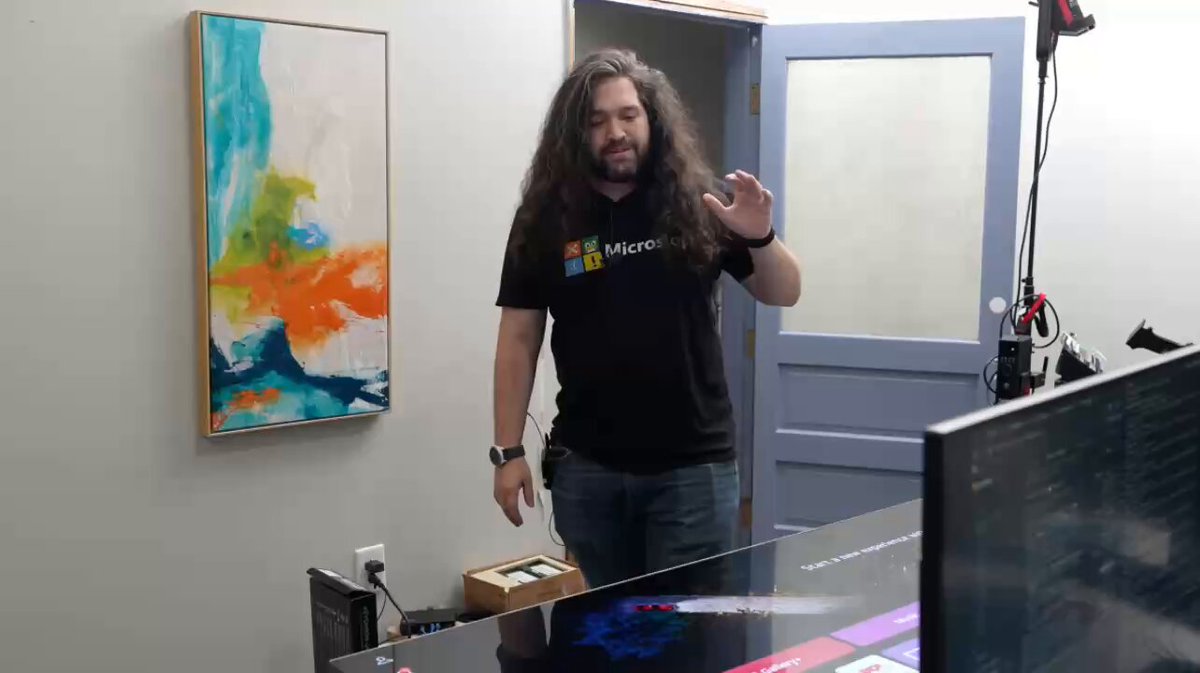
A recent Braiins Forge video and thread raises a question every American buyer, facility operator, school, hotel, fleet manager, and procurement officer should be asking: when a connected screen, camera, speaker, vehicle, or sensor is sitting idle, where is its data going?
Braiins Forge points to allegations involving consumer smart TVs, including retained voice-command audio, local-network discovery, and outbound data collection. Those allegations should be independently tested. But the larger issue does not depend on one brand or one video: consumers and operators deserve evidence of what a device actually does on a network—not just a privacy policy, a settings menu, or a marketing promise.
Your TV might be one of 216,000,000 LG smart TVs sold worldwide.
Researchers rooted one and pulled plain text transcripts of what people said in the room.
It kept recording while the screen looked off.
If your TV can do that, it’s time to look at everything else on your desk 👇🏻 pic.twitter.com/dnoMJd9FsI
— Braiins Forge (@Braiinsforge) September 8, 2026
Source video: Braiins Forge on X. If X does not load the embedded player in your browser, watch the original post on X.
From claims to observed behavior
That is the purpose of US Data Certification from Made in USA Inc.
The model is deliberately narrow: put the named device, firmware version, and hardware revision on an isolated bench; observe it across defined network paths; enumerate the destinations it contacts; and identify the jurisdiction associated with each destination. The certificate records what was observed during a named window. It does not claim to know why the device behaved that way.
That distinction is not semantics. It is the difference between a vendor assertion and evidence.
What a DATA-DEV certification can show
For connected devices—including smart displays, guest-room tablets, kiosks, voice devices, cameras, microphones, building IoT, and radios—the certification path can document:
- the exact model, revision, and firmware under observation;
- every observed network destination during the test window;
- the network path on which each destination appeared;
- the registered jurisdiction associated with the destination; and
- whether a later firmware update, new destination, or changed jurisdiction requires review.
A single Wi-Fi test is not enough. A device may behave differently on public and private SSIDs, wired networks, or after an update. The point is to make the testing boundary visible, repeatable, and honest.
What the certificate does not claim
US Data Certification is not a government authorization, a substitute for FedRAMP, CMMC, SOC 2, ISO 27001, or a statutory compliance program. It does not certify intent. It documents behavior observed under stated conditions.
That is a standard worth insisting on. In the old model, companies said, “Trust us.” In the new model, buyers can ask a better question:
Show us what it sends.
Start with one device. Get back a named record of where it went, which network carried it, and what changed.
Contact Made in USA Inc. to discuss US Data Certification.
Source note: The Braiins Forge thread is the source for the smart-TV allegations discussed above. Made in USA Inc. has not independently verified those specific allegations. The Braiins Deck is described by its maker as open-source and microphone-free; it is not represented here as a Made in USA product.