
Made in USA Mondays, Episode 5, aired September 7, 2026, a Labor Day episode on data sovereignty. This summary is based on automatic YouTube captions, which can misspell names and drop words.
The Labor Day episode of Made in USA Mondays stepped away from a single food-label fight and asked a wider question: who is collecting information about you, where does it go, and who is supposed to control it? The hosts said Made in USA Inc. has spent years verifying product claims. Episode 5 argued that the next question is just as important as “where was this made”: can you show where the data goes?
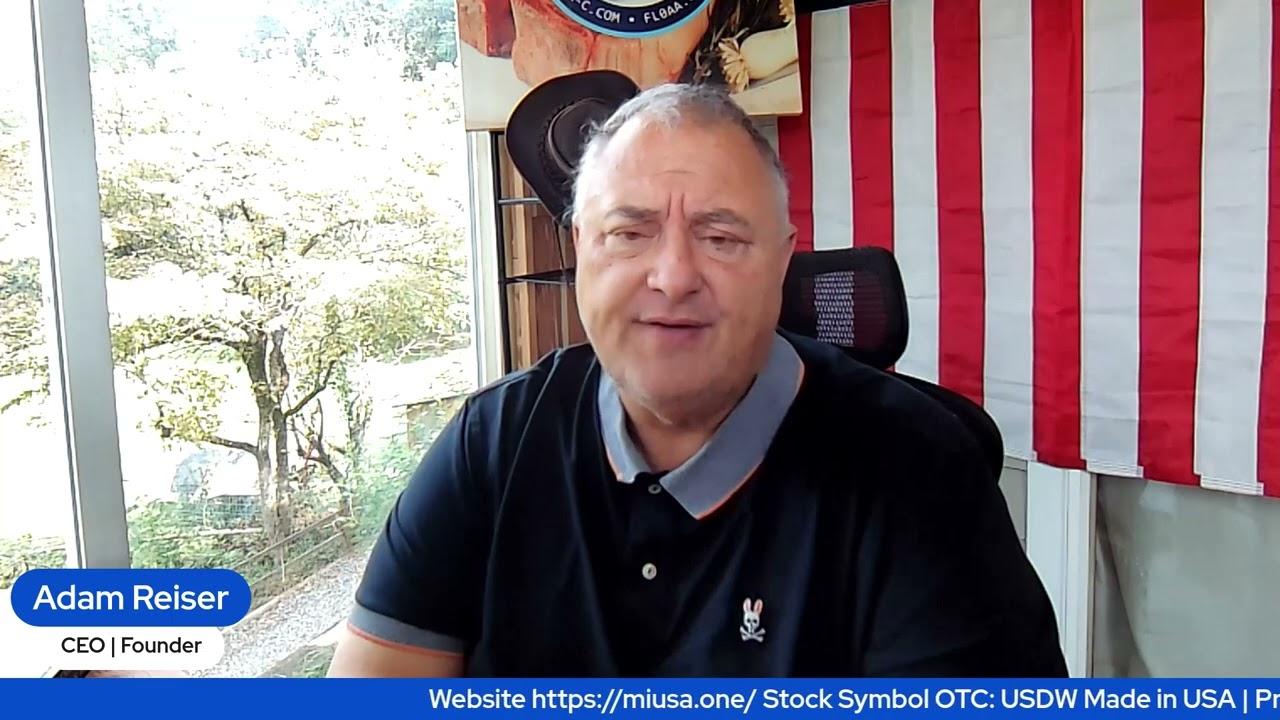
Adam Reiser defined data as the bits accumulated over years — not only what sits on a server, but health records, travel, buying habits, even how you walk through a store. He described modern retail cameras and reward programs as collection points, and social platforms as another silo. The problem, he said, is that those silos treat the person as the product. Companies lease the profile to advertisers, credit agencies, and insurers, and they keep the underlying file. Medical records used to come home as a paper copy you could hold. Now, in his telling, that control has slipped away.
The product they put against that problem is the Data Wallet. Reiser described it as a place to accumulate personal data under a digital avatar the person controls — buying, medical, household, and tax information included. Michelle Tan, who the hosts called out as the data-wallet expert on the panel, added that each farm or manufacturer can also have a UUID-level wallet from the start, so a scanned package and a person’s wallet can meet without dumping the underlying file into someone else’s inbox. If data is leaked, she said, you see the result in a flood of sales email; the design they want is the opposite: you own it, you sign when you want to contribute, and you can keep it if you do not.
That is also where “data sovereignty” and US Data Certified entered the conversation. The hosts said that when a chip manufacturer moves production back to the United States, back doors and embedded code can still travel with the device. A US Data Certified path, as they described it, is about isolating that risk, identifying leakage back to an original equipment manufacturer, and keeping data in the United States rather than letting it flow to foreign owners. They also talked about connected devices in the home — refrigerators, robot vacuums that map a house — and about why a back door in a connected system is not only a privacy issue. Permission and revocation mattered too: if a law requires consent, they want a wallet that can say no and have the data removed.
They tied the theme back to labor, voting, and the Made in USA claim itself. The closer was explicit. For years, Made in USA has asked companies to prove where their products come from. The next question, the hosts said, should be whether you can prove where your data goes. Look for a US Data Certified mark, they said, and treat opacity the same way they treat an unverifiable origin claim: if someone will not talk about the path, they may have something to hide.
We have written about the Data Wallet before, including From Fuel to Facts: Why “Made in USA” and Data Wallet Matter Now and Data Sovereignty Is the New National Security.
Key takeaways
- The Labor Day episode argued that data sovereignty — who collects your information, where it goes, and who controls it — is the next question after product origin.
- The hosts described ordinary life as a set of data silos (stores, cameras, platforms, medical files) in which the person is often the product.
- They presented the Data Wallet as a person-controlled store of that information, with a matching wallet or UUID for a farm or manufactured good.
- US Data Certified, as they described it, is meant to keep device and customer data from leaking through back doors, including when production is reshored.
- The closer: if a company will not show where data goes, treat that the same way you would treat an unverifiable Made in USA claim.
Notable quotes
Our goal today is to make data easy to understand, show you why this matters in your life, and also to explain how Made in USA Inc. is approaching the problem of verifying and solving the protected data path.
Made in USA Mondays Ep. 5, about 0:42, automatic captions
You are the product.
Made in USA Mondays Ep. 5, about 8:13, automatic captions
Made in USA has asked companies to prove where their products are coming from. And what we’re starting to realize that the next question really should be just as important is can you [prove] where your data goes.
Made in USA Mondays Ep. 5, about 1:20:29, automatic captions
FAQ
What is a Data Wallet, as discussed in this episode?
The hosts described it as a digital wallet, under the person’s control, that can hold personal data and connect to a product-level identifier when you scan a package, without handing the underlying file to every company that wants it.
What is US Data Certified?
As explained on the show, a certification path meant to show that data collected by a product or system stays on a protected path in the United States and is not leaking through back doors to a foreign manufacturer.
Was this a holiday episode?
Yes. It was presented as a Labor Day edition of Made in USA Mondays, with a close that tied data privacy to work, dignity, and sovereignty.
Source & credit
Episode: Made in USA Mondays Ep. 5 — Data Sovereignty, on YouTube @madeinusainc.
X post: @REISERIAM, September 7, 2026, and the X broadcast at x.com/i/broadcasts/1RJZzBRkYbzJB.
Summary prepared from automatic YouTube captions. Quotes are approximate and may reflect caption errors.