
Made in USA Mondays, Episode 4, aired August 31, 2026, with returning guest Bruce Porter Jr. This summary is based on automatic YouTube captions, which can misspell names and drop words.
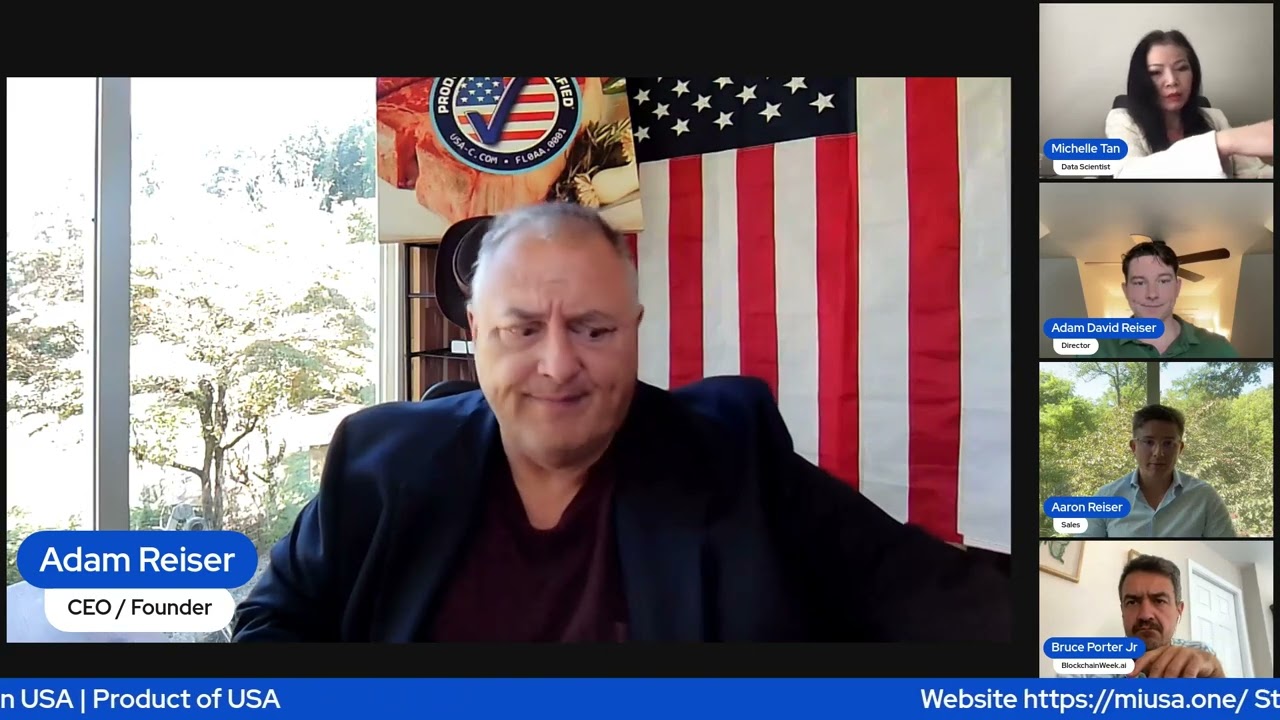
Episode 4 of Made in USA Mondays was billed as “Technology of Truth”: not another week of headlines, but a look at the verification stack behind a Made in USA or Product of USA claim. The hosts framed the hour as an interview with Adam Reiser, the CEO and founder of Made in USA Inc., about audit trails, farm-to-table traceability, and the evidence that is supposed to sit behind a seal. Bruce Porter Jr. returned as a guest and updated the audience on UNGA Blockchain Week in New York, which he said would run September 10 to 19 with 146 speakers, with Made in USA as a partner.
Reiser’s origin story, as he told it, started after a successful exit in the dot-com years. He described traveling the United States, doing site visits, and finding that some companies putting a Made in USA sticker on a package were repackaging rather than producing here. That, he said, is when the work hardened into Made in USA Certified, a registered trademark, alongside Made in USA News and a Made in USA magazine he said once had tens of thousands of paid quarterly subscribers and original cover art. Certification, in his telling, was not the first product. The magazine and the news operation came first; the seal came after they kept finding claims that would not stand up.
The story the panel lingered on was a refusal to compromise. Reiser described a prospective deal involving USA-made hockey pucks for a national team, a satchel of cash left on his desk — he put the amount at more than $300,000 in the dollars of that earlier decade — and his decision not to take it. The younger hosts tied that story to a later FTC review. They said that when the FTC was investigating country-of-origin and Made in USA claims, and other certifiers were getting hit, Made in USA Inc. went through an audit, that the agency used their process in work on what counts as substantial transformation, and that they did not end up in the same kind of enforcement action. Those are the hosts’ accounts of that period, not a reading of an FTC docket on the air.
From there the conversation moved back to the present: imported Argentine beef, a 45-day outer limit they described for a certified producer to fall out of compliance, recall management for small processors, and a local butcher they called Trevor who realized he could not honestly say “local beef” without a trace. They also talked about honey they said can be relabeled after it comes in from Mexico, and about industry seals — humane, women-owned, and others — that look official but may have nothing behind them. A Product of USA Certified seal, they insisted, is not a one-time certificate. If the facts change, or if someone lies, there are legal consequences.
They closed on demand and on a credit they wanted to give Costco, which they said was the first company to announce it would not accept foreign ground beef. The working address they gave viewers was miusa.one, and they pointed ahead to the new Friday news show as the weekly companion to Mondays. For shoppers, the last line was the same as the title: a claim is only as good as the technology and the audit trail that can prove it.
For more on FTC enforcement of Made in USA claims, see FTC Enforcement of Made in USA Claims Intensifies. The Product of USA rule the hosts kept returning to is covered in USDA Closes Loophole with Strict Product of USA Origin Labeling Rule.
Key takeaways
- The episode was an interview with Adam Reiser about the verification technology and audit trail behind Made in USA Certified and Product of USA Certified claims.
- Reiser described building the certified mark after finding companies that were putting a Made in USA sticker on goods that were only being repackaged here.
- He told a story about refusing a cash offer rather than compromising a certification, which the panel treated as the company’s core value.
- The hosts said a later FTC review tested that process and that a certified seal is not a one-time piece of paper; lying or letting the facts go stale has consequences.
- Bruce Porter Jr. promoted UNGA Blockchain Week in New York, September 10 to 19, and the team pointed viewers to miusa.one.
Notable quotes
Today’s episode is about technology of truth… the evidence that we capture to prove to you that what we’re providing you is actually what we say it is.
Made in USA Mondays Ep. 4, about 0:23, automatic captions
When you see a product of USA Certified seal on a product, that’s not just a one-time static one-and-done deal that could eventually change over time.
Made in USA Mondays Ep. 4, about 47:30, automatic captions
The problem is they don’t trust those claims. So what we do is we help make sure that the claim that you’re putting on your packaging is true, accurate, verified, audited, certified.
Made in USA Mondays Ep. 4, about 1:00:11, automatic captions
FAQ
Who appeared on Episode 4?
Adam Reiser, the CEO and founder of Made in USA Inc., was the main interview subject. Bruce Porter Jr. returned as a guest, and the regular Monday hosts were on the panel.
What did they mean by “technology of truth”?
The audit trail, traceability, and evidence systems they say have to sit behind a Made in USA or Product of USA claim, so a seal is not just a sticker.
Is the FTC story in this episode an official agency finding?
No. It is the hosts’ recollection of an audit and of how their process related to later FTC work on substantial transformation. For official actions, see the FTC record and our later enforcement report.
Source & credit
Episode: Made in USA Mondays Ep. 4 — Technology of Truth, on YouTube @madeinusainc.
X post: @REISERIAM, August 31, 2026, and the X broadcast at x.com/i/broadcasts/1nJOLQPQBgWxR.
Summary prepared from automatic YouTube captions. Quotes are approximate and may reflect caption errors.