
A March executive order, FTC settlements, and warning letters show why manufacturers and retailers need product-level evidence before making unqualified Made in USA claims.
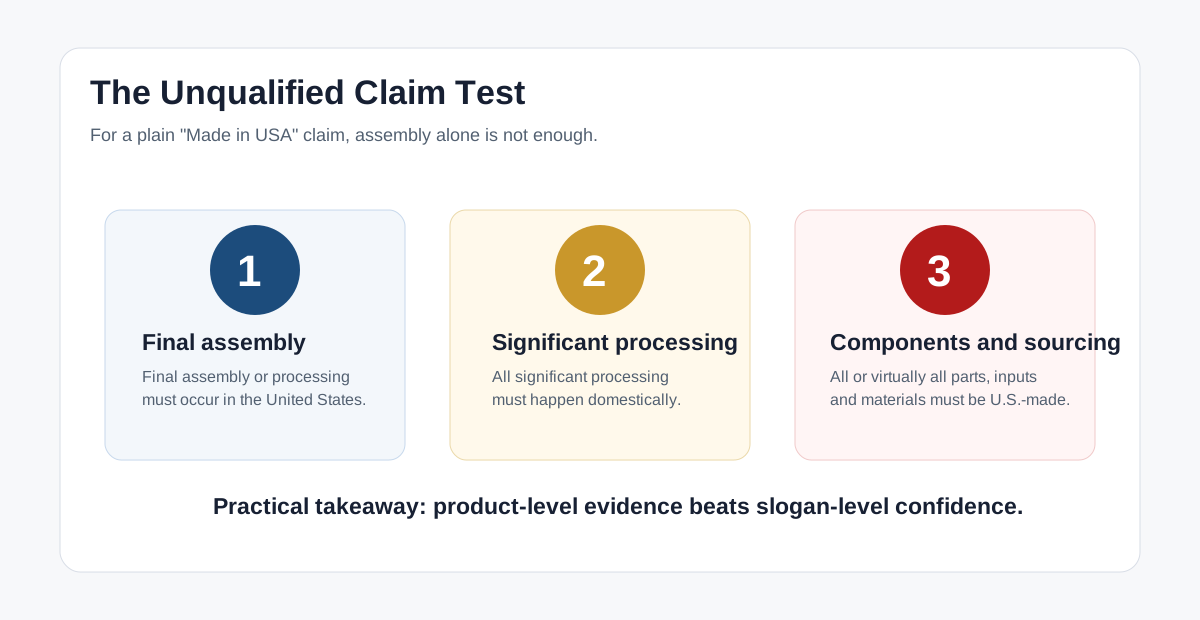
In March 2026, President Donald J. Trump signed Executive Order 14392, “Ensuring Truthful Advertising of Products Claiming to be Made in America.” The order directed the Chairman of the Federal Trade Commission to prioritize enforcement against sellers and manufacturers whose unqualified “Made in America,” “Made in the USA,” or similar origin claims violate the law.
The policy premise is simple: American consumers deserve accurate information about whether products advertised as U.S.-made actually are, and companies that invest in domestic production should not compete against false claims aimed at patriotic buyers.
The FTC has followed through. On April 14, 2026, the Commission announced a Made in USA enforcement sweep with three federal-court settlements and two closing letters. On July 6, 2026, FTC staff sent warning letters to seven additional companies whose marketing suggested products were “Made in the USA,” and in one case “Made in Texas,” despite indications that the goods were imported in whole or in significant part.
The “All or Virtually All” Standard
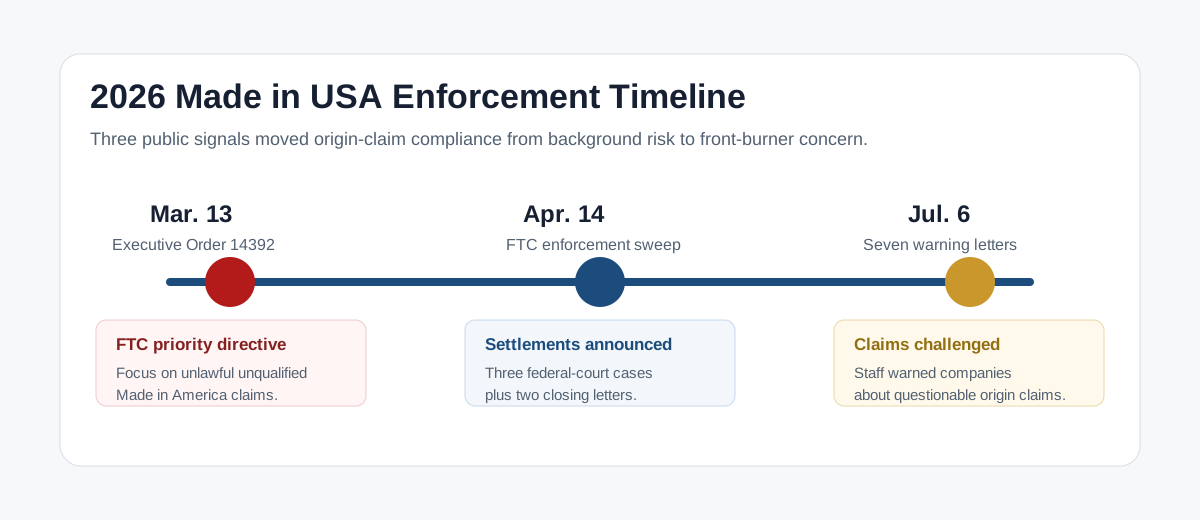
Under the FTC’s Made in USA standard and the Made in USA Labeling Rule, an unqualified claim that a product is “Made in the USA,” or equivalent wording such as “#MadeinUSA,” requires that the product be all or virtually all made in the United States.
That means final assembly or processing must occur in the United States. It also means all significant processing must occur here, and all or virtually all ingredients, components, or materials must be made and sourced domestically.
Qualified claims and claims about specific processes can be lawful if they are truthful and substantiated. But unqualified origin claims are held to the stricter test.
Companies that cannot substantiate a claim risk enforcement under Section 5 of the FTC Act and the Made in USA Labeling Rule. Available remedies can include consumer redress and civil penalties. The FTC’s 2025 inflation adjustment set the maximum civil penalty at $53,088 per violation, an amount the Commission has continued to use in 2026.
April Settlements
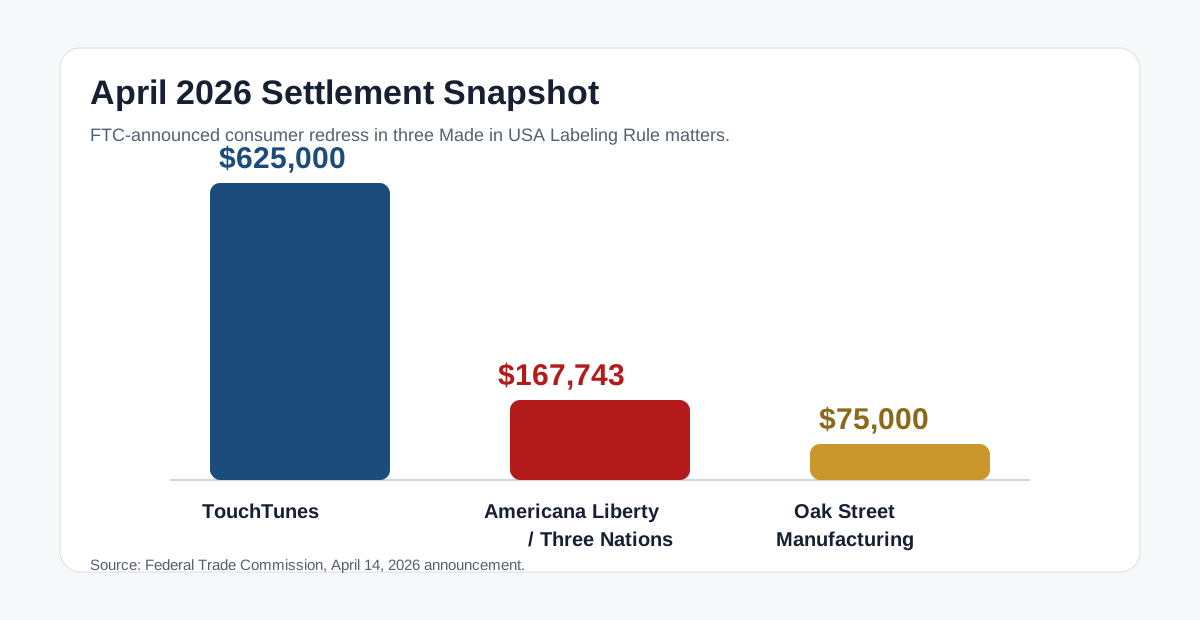
The April actions resolved allegations against three companies:
TouchTunes Music Company agreed to pay $625,000 toward consumer redress, stop misrepresenting U.S. origin, and notify consumers. The FTC alleged the company made unqualified Made in USA claims for electronic dartboards even though components essential to function, including computer chips, cameras, and monitors, were manufactured outside the United States, despite domestic assembly.
Americana Liberty LLC, Three Nations LLC, and their principals agreed to pay $167,743 toward consumer redress and to stop the challenged claims. The FTC alleged flags, military flags, and related accessories were advertised with U.S.-origin claims including “Made in the USA,” “All-American Made,” and “100% Made in the USA,” even though several products were wholly imported from China and others contained significant or essential Chinese components. The case followed a July 2025 warning letter.
Oak Street Manufacturing Company agreed to pay $75,000 toward consumer redress and stop the challenged claims. The FTC alleged certain footwear was marketed with claims that it was handcrafted in the United States and made without overseas pre-assembled components, while some components were produced abroad and, in some instances, final assembly occurred outside the United States. This matter also followed a 2025 warning letter.
FTC staff also closed investigations of Marketing Holders LLC and Lamar Trailers, Inc. after those companies remediated certain claims and committed to future compliance with the standard.
Christopher Mufarrige, Director of the FTC’s Bureau of Consumer Protection, said the Commission would robustly enforce the standard so consumers can have confidence that their purchases of American-made products support American workers and manufacturing.
July Warning Letters
The July 6 letters went to A&F Drum Company LLC, Z-Tech Advanced Technologies Inc., Vtron Inc., Helmel Engineering Products Inc., NebTech Inc., Lucky Bar Holdings LLC, and My Vape Order Inc.
Products at issue included drums, industrial laser machinery, coordinate measuring machines, and e-cigarettes. FTC staff indicated that information suggested the products were imported in whole or in significant part. The letters warned that, absent adequate substantiation that all or virtually all of a product was made in the United States, the claims may violate the law and could lead to an action seeking consumer redress and/or civil penalties.
Mufarrige said Americans spending their money on goods marketed as Made in USA deserve confidence that those products were all or virtually all made in this country, and that the FTC would hold companies accountable for misleading U.S.-origin claims.
Why Third-Party Certification Matters Now
Self-declared origin claims are only as strong as the bill of materials, supplier affidavits, production records, and sourcing evidence a company can produce if the FTC asks. The recent warning letters and settlements show that assembly in the United States is not enough when essential components are foreign, and that patriotic phrasing does not create a safe harbor.
Made in USA Inc. (OTC: USDW) operates the Made in USA Certified® and Product of USA Certified® programs through its platform at miusa.one. The company describes itself as a veteran-owned, CAGE- and SAM-registered technology and certification business. Its Veritze™ system combines AI, blockchain, ERP, and IoT tools to document origin, production, and supply-chain data in auditable form.
Company materials state that these programs are designed to support substantiation relevant to FTC labeling expectations as well as Buy American, USDA, FDA, and related federal and state requirements. In June 2026, Made in USA Inc. completed an all-stock acquisition of assets from an affiliated certification business, consolidating certification-related brand assets, verification tools, blockchain infrastructure, TPM security capabilities, ERP systems, and IoT-integrated technology onto its platform.
Independent, documented certification does not replace a company’s legal obligation to tell the truth, and it does not immunize a claim that fails the all-or-virtually-all test. It does, however, give manufacturers, importers, and retailers a structured way to map components, labor, final processing, and supporting evidence before an unqualified Made in USA claim, or a hashtag, goes live.
In an enforcement environment shaped by the March executive order, that documentation is increasingly the difference between a marketing slogan and a claim that can survive scrutiny.
Practical Next Steps
Companies still using unqualified U.S.-origin language should review product-level substantiation now.
- Map the bill of materials to country of origin.
- Identify where final assembly and significant processing occur.
- Separate unqualified claims from qualified claims.
- Preserve supplier attestations and production records.
- Review website copy, packaging, marketplaces, social media, hashtags, and distributor materials.
- Certify claims that can be substantiated, and qualify or remove claims that cannot.
Those that can meet the standard have a clearer path to say so. Those that cannot should qualify the claim or remove it before regulators, competitors, or consumers force the issue.
Back Your Made in USA Claim with Verified Evidence
For U.S. businesses concerned about whether their origin claims can withstand scrutiny, Made in USA Inc. provides a practical path forward. As a veteran-owned, family-operated business with a certification heritage dating to 2004, the company helps manufacturers substantiate U.S.-origin claims through independent supply-chain auditing, documentation review, and ongoing compliance support.
From mapping components and supplier origins to reviewing manufacturing locations and maintaining product-level evidence, Made in USA Inc. helps businesses identify documentation gaps, establish a foundation for certification, and keep supporting records current as supply chains change.
Take the next step toward Made in USA Certified®. Explore certification programs and pricing, select the option appropriate for your business, and begin the onboarding process. Certification is awarded upon successful completion of the applicable audit and review.
Sources
- Executive Order 14392, The White House, March 13, 2026
- FTC April 14, 2026 Made in USA sweep announcement
- FTC July 6, 2026 warning-letter announcement
- FTC 2025 civil penalty inflation adjustment announcement
- Made in USA Inc. Form 8-K, June 2026 asset acquisition disclosure
- Made in USA Inc. company and certification program information
This article is for informational purposes only and is not legal, compliance, or investment advice. Origin claims should be reviewed with qualified counsel. References to Made in USA Inc. (OTC: USDW) describe publicly available company information and do not constitute a recommendation to buy or sell any security.