
Counterfeit and falsely labeled products have flooded global markets. What has changed is the composition of those products.
Many imported items — particularly from China — embed:
- Microchips
- Cameras
- Wireless modules
- Processors
These components can silently enable surveillance, data exfiltration, or backdoor access, making them difficult to detect, especially in critical systems.
Recent U.S. enforcement underscores the risk: the Justice Department achieved its first successful prosecution of Chinese AI-related economic espionage, highlighting how advanced technology theft and covert penetration into U.S. systems are real and ongoing threats (see analysis from the Foundation for Defense of Democracies).*
Without verified supply-chain transparency, America cannot know what it is installing, deploying, or defending with.
Enforcement Has Revealed the Problem — But Not Solved It
Recent regulatory actions make clear that the old system is failing.
In 2026, the National Advertising Division (NAD) ruled against a manufacturer using unqualified “Made in USA” claims because small but material components could not be proven to be domestic. Even patriotic imagery was deemed misleading when the origin data was unclear.
This highlights a deeper truth:
If regulators cannot verify a buckle or a screw, they certainly cannot verify a data-capable chip.
Paper certifications and supplier affidavits are no match for modern embedded intelligence.
President Trump’s Policies Demand a New Standard of Proof
President Trump’s renewed emphasis on strengthening domestic manufacturing and securing supply chains rightly prioritizes “Made in USA.” But policy needs a foundation: verifiable proof, not assertions.
As tariffs rise and defense procurement tightens, enforcement agencies face a critical gap:
- They can mandate compliance.
- They can penalize violations.
- But they cannot see inside the product.
Without real-time, tamper-resistant evidence of origin, vulnerabilities slip through.
The Real Problem: America Lacks Product Identity Infrastructure
Modern commerce cannot answer the questions that now matter most:
- Where was this product actually made?
- Where did each component originate?
- Does it contain electronics or networked chips?
- Has any verification record been altered?
Without infrastructure that makes these answers auditable and verifiable, counterfeit claims and security risks will persist.
The Solution: Made in USA Inc. and the Product Data Wallet
Made in USA Inc. is building the missing trust layer for American certification.
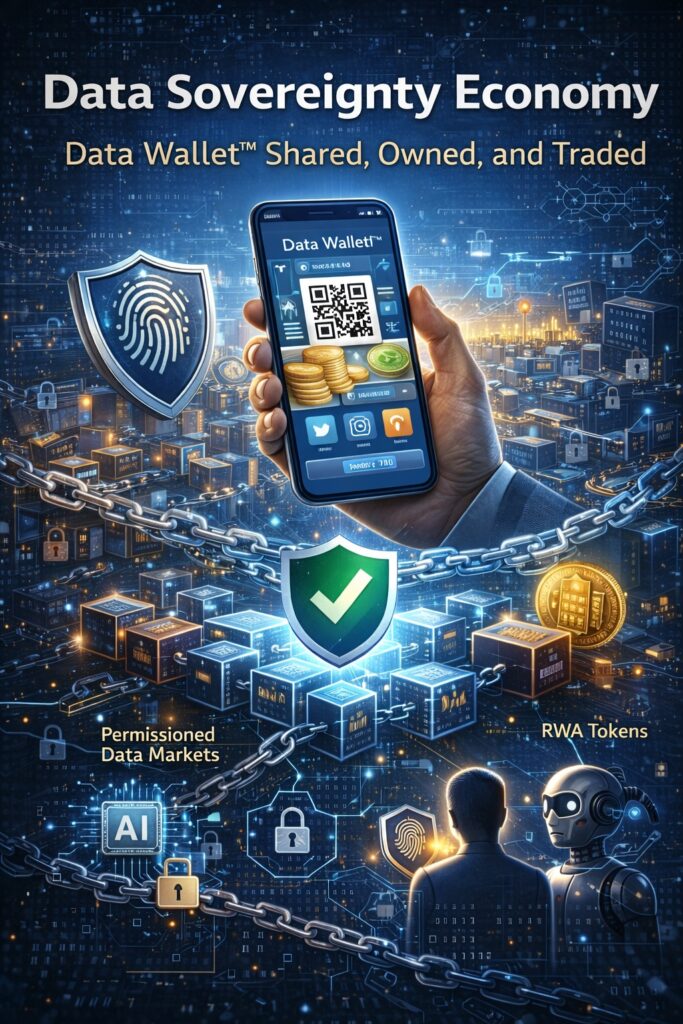
Every Data Wallet contains:
- Component-level origin disclosures
- Electronics and chip declarations
- Manufacturing location verification
- Audit and inspection records
- Time-stamped verification events
- Immutable hashes anchored on blockchain
This is not a label.
It is a provable product identity.
Why This Matters for Military and National Security
For defense, infrastructure, and sensitive systems, the Data Wallet enables:
- Verification that no foreign surveillance hardware is embedded
- Proof of origin down to the component level
- Rapid audits without disassembly
- Prevention of compromised parts entering supply chains
Instead of trusting suppliers, America verifies products.
Instead of discovering risks after deployment, America prevents them before installation.
From Marketing Claims to Machine-Readable Truth
The Data Wallet transforms “Made in USA” from a slogan into a machine-readable, auditable fact.
It:
- Protects military and government procurement
- Shields consumers from hidden surveillance risks
- Strengthens Trump-era reshoring and certification mandates
- Makes fraud economically irrational
In an age where hardware can spy, sabotage, or steal, verification is no longer optional.
The Future of American Certification
The question is no longer whether America should strengthen “Made in USA.”
The question is whether it will continue relying on paper promises —
or adopt verifiable digital truth embedded into every certified product.
Made in USA Inc. is the missing trust layer America urgently needs.