

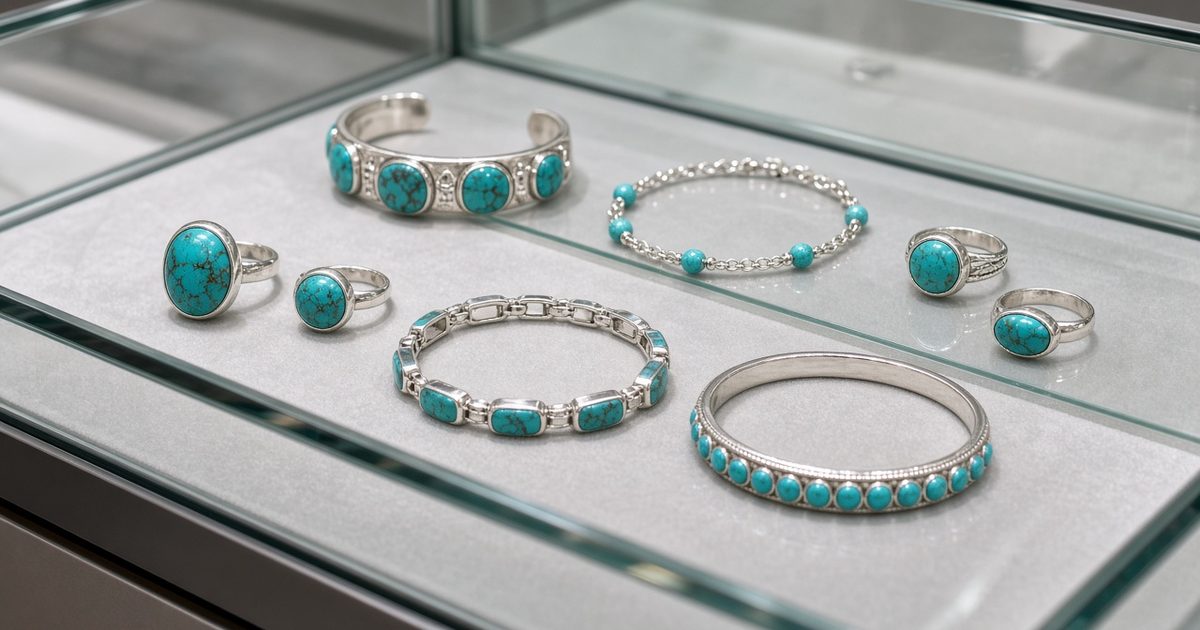
Albuquerque gallery owner Nael Ali pleaded guilty in federal court on Oct. 18, 2017, to two felony counts under the Indian Arts and Crafts Act. He admitted selling jewelry made in the Philippines as the work of Native artists.
What he admitted
- He sold Native-style jewelry made by laborers in the Philippines at Gallery 8 and Galleria Azul in Albuquerque’s Old Town.
- He mixed the imported pieces with genuine Native-made jewelry without marking their country of origin.
- He gave employees lists of symbols and initials to suggest the pieces were Native-made, and trained them to tell customers so.
- On Feb. 26, 2014, an employee acting at his direction sold an undercover agent ten rings for $1,115, presented as Navajo-made but actually made in the Philippines.
His plea agreement recommended up to 18 months in prison. The AP reported that Ali and supplier Mohammad Manasra, who pleaded guilty earlier to lesser charges, agreed to forfeit 5,268 pieces of jewelry.
The wider case
The U.S. Fish and Wildlife Service led the investigation, which included October 2015 raids on galleries in Albuquerque, Gallup and Calistoga, California. The AP described the pleas as the first convictions in the probe.
The Indian Arts and Crafts Act makes it a crime to sell goods in a way that falsely suggests they were made by Native Americans. Federal law also requires imported Native-style jewelry to be permanently marked with its country of origin. In a later sentencing memo, prosecutors said inspected imports in the case carried “Made in Philippines” decals only on removable plastic bags.
FAQ
What law did he violate?
The Indian Arts and Crafts Act, which bars selling goods in a way that falsely suggests they are Native-made.
Where was the jewelry made?
In the Philippines.
What sentence did the plea recommend?
Up to 18 months in prison, followed by supervised release.
Source & credit
Source: Associated Press via Inquirer.net: “Guilty pleas in New Mexico sale of PH-made fake Indian artifacts”, Oct. 19, 2017.
Also: U.S. sentencing memorandum, United States v. Ali (D.N.M.); National Geographic: “History’s Biggest Fake American Indian Art Conspiracy Revealed”.